A creek nobody noticed... until it was broken.
When a waterway belongs to everyone, getting everyone to the table is the job. That’s what we did with the Carpenter Creek and Bayou Texar Watershed Management Plan.
300+
Citizens and stakeholders engaged in the planning process.
$8.1M
In projects funded at initial adoption of watershed management plan.
15
Community-approved and science-based improvements for the watershed.
THE PROBLEM THAT MATTERED
Carpenter Creek runs through the heart of Pensacola, Florida. For generations it was a natural feature of the city, but decades of development had choked it with sedimentation, degrading water quality and accelerating erosion all the way to Bayou Texar and Pensacola Bay.
When local officials secured a grant from to fund a Watershed Management Plan, they had the resources and the science. What they didn’t have yet was the community.
A plan that the public doesn’t understand, or doesn’t trust, doesn’t get implemented. That’s where we came in.
OUR APPROACH
Connect with creek advocates and residents, then build from there.
Environmental planning typically follows a fixed script: do the science, publish the draft, hold the meeting, submit comments.
We started differently, by finding the people who already cared about this unique waterway. The creek had a history, and that history had advocates. We organized them first, then expanded outward:
1. Stakeholder activation before the public process.
We convened early sessions with existing watershed advocates, property owners, and water-quality groups.
Our goal was not to inform them, because they knew as much as anyone about the watershed’s current state. Instead, we wanted to learn from them and earn their trust. These opinion leaders became the foundation of public support before a single public meeting was held.
2. Targeted outreach to the unengaged
We identified and reached residents and property owners throughout the watershed who lived near, drove past, or simply were curious about the process. This expanded the conversation far beyond “the usual suspects” and built a broad cross-section of the community to support the project.
3. Hybrid online and in-person engagement activities.
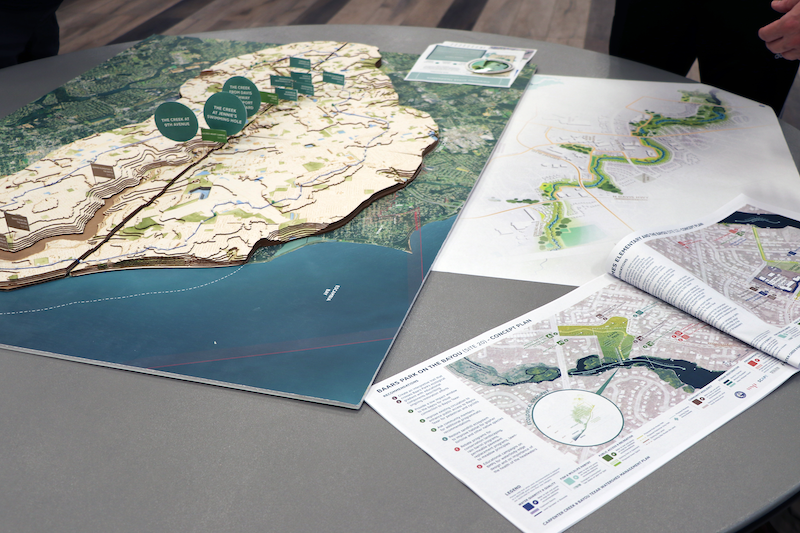
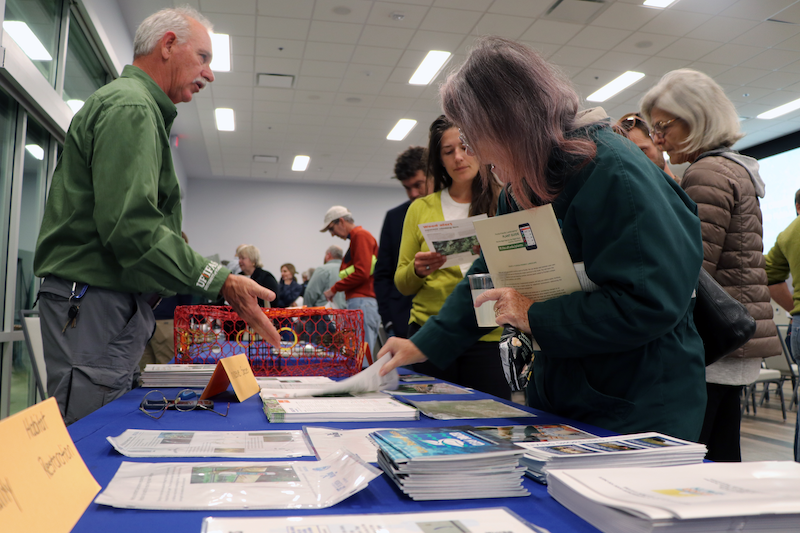
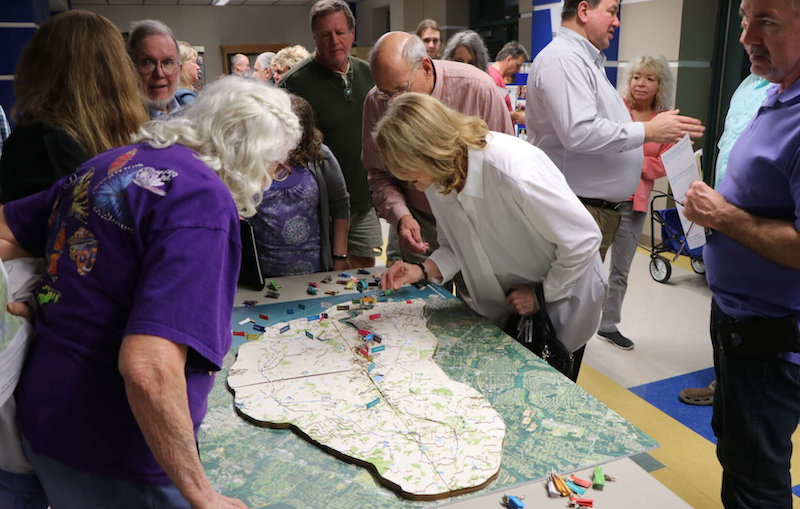
With COVID shutdowns looming, we were forced to pivot from our initial plan, and quickly built a dual-track engagement platform of direct mail, social media, interactive online mapping tools, and in-person workshops. Public participation never depended on any single channel or meeting. No one was left out because they couldn’t attend in person.
4. Public ideas → vetted plan → community vote.
Through the extended public input process, we worked with the technical team to identify 15 specific watershed interventions, then brought those proposals back to the community for review and support. The public saw their ideas reflected in the plan, and because of that, they supported it.
"We all want a clean environment and healthy waterways, but it's not always easy to get people to participate in that effort. The Carpenter Creek project team, including Impact Campaigns, ensured our citizens knew about this waterway and successfully engaged them in solutions to protect it."
- Robert Bender, Escambia County Commissioner
WHAT CHANGED
More than 300 advocates and stakeholders participated across online surveys, town-hall meetings, and in-person workshops. The final Watershed Management Plan earned community approval for all 15 recommended projects, from targeted stormwater upgrades to creek reshaping at erosion hotspots.
Three of those projects were funded before the plan was even formally adopted. Public momentum created political will before the vote was called.
WHAT THIS MEANS FOR COMMUNITIES LIKE YOURS
Environmental and infrastructure plans often fail at adoption, not at the technical stage. The science gets done. The funding gets secured. Then the public meeting happens, and without early awareness, interaction, and measurement, the community reacts with concern or worse, opposition, and the project falters.
If you’re working on a watershed, a stormwater project, a park, or any environmental improvement that requires public approval, your engagement strategy isn’t an add-on. It’s the difference between a plan that gets implemented and one that gets stuck on a shelf or dies altogether.
Need help engaging your community around a complex environmental or stormwater project? We’d be glad to discuss how strategic community engagement can turn challenging projects into community successes.