Community Engagement 101: The AIM Framwork™
Key Takeaways:
- Public engagement and community outreach are no longer optional.
Trust in institutions is declining, and repairing that damage requires authentic, two-way engagement. - Use the Awareness-Input-Measurement AIM Framework™.
This simple framework guides outreach and engagement efforts and ensures fair representation and participation. - Meet people where they are, then close the loop.
Go to your audience instead of waiting for them to come to you. Then, report back on what you heard and how it shaped your decisions.
Let’s be honest. These days, you can’t just shout your message from the rooftops and expect people to care anymore. Whether you’re a nonprofit organization launching a new initiative, a government agency planning a major infrastructure project, or an advocacy group working to change hearts and minds, your success may come down to one critical thing: authentic engagement with your audience.
But what exactly is community engagement, and why should you care? More importantly, how do you do it right? Let’s dive in.
What Is Community Engagement, Anyway?
Community engagement (also called public engagement) is the process of working collaboratively with people connected by geography, shared interests, or shared concerns. To put it simply, community engagement means having honest conversations with the people who matter most to your organization, project, or cause.
Community engagement can take many forms, depending on your audience and your community. Here are a few simple examples:
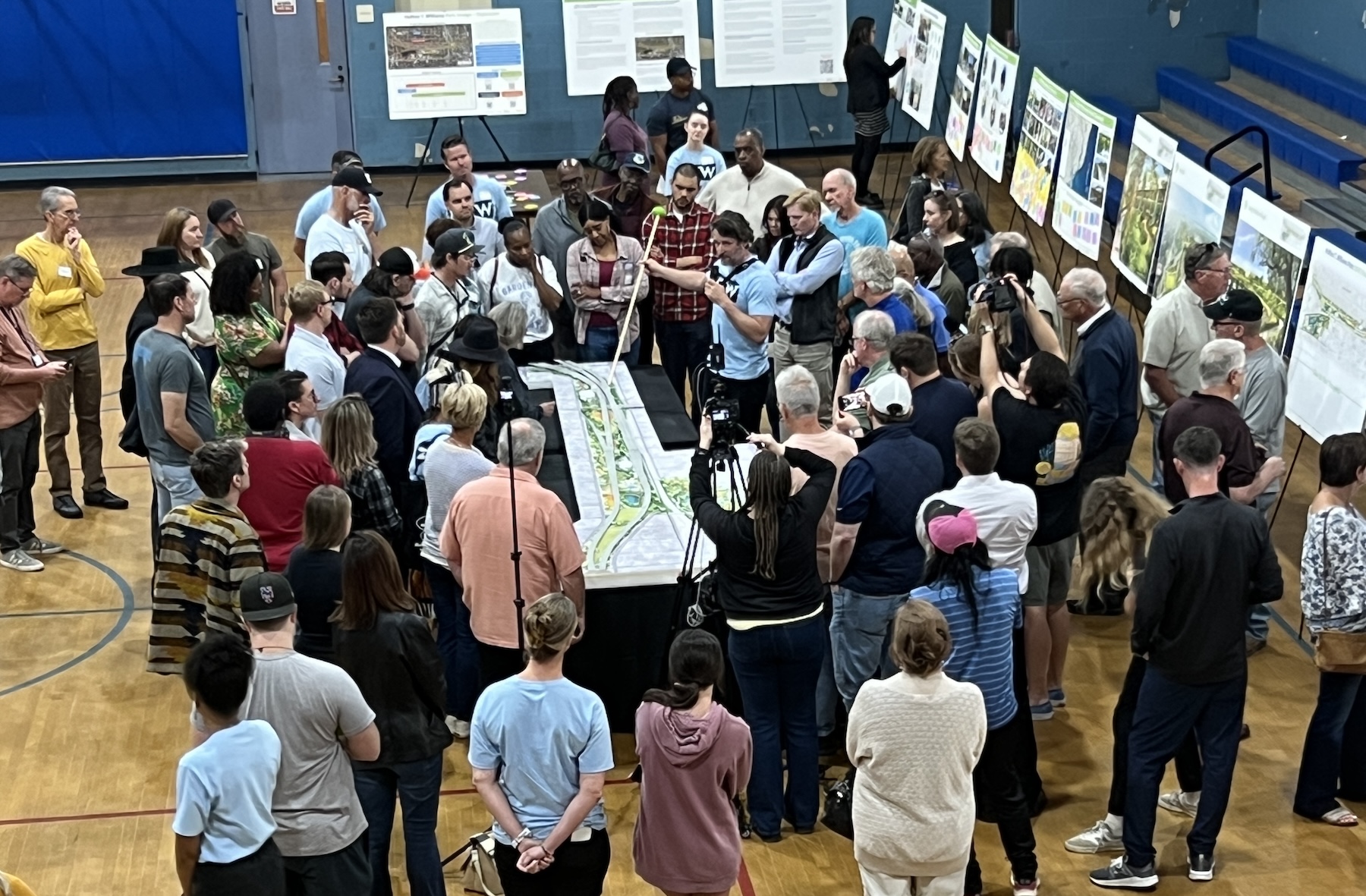
- Hosting a neighborhood town hall meeting to gather input on a new development project.
- Running focus groups to understand what the public really thinks about your issue or policy suggestion.
- Setting up an online survey to collect feedback from constituents, or
- Organizing a community festival where residents can connect with local resources and services.
These are very basic examples, and real public engagement isn’t limited to just one event or tactic. Real engagement isn’t a one-and-done process. It’s not a one-way street. It’s a two-way conversation that meets people where they are, facilitating meaningful dialogue that helps them feel heard, valued, and empowered to contribute.
It’s talking with people. Not talking at them.
Why Community Engagement Matters More Than Ever
In today’s world, trust is the most valuable currency, and it’s becoming more scarce by the day. According to the Edelman Trust Barometer, a comprehensive annual survey of global attitudes toward institutions, trust levels continue to decline across business, government, media, and non-governmental organizations (NGOs).
The 2025 report revealed that economic fears and distrust have evolved into a widespread sense of grievance—meaning not only have people lost trust, but they also feel like they’ve been wronged or taken advantage of.
More recently, the 2026 edition of the Trust Barometer indicated that this feeling of distrust and grievance had grown into something more troubling: insularity. Specifically, a majority of respondents indicated an “unwillingness or hesitance to trust someone with different values, approaches to social issues, backgrounds, or information sources.” Sound familiar?
There are several reasons for this continuing (and troubling) trend, and we won’t dig into them here. But what we have seen firsthand is that authentic engagement can begin to repair and rebuild trust. Here’s how it might apply to you.
For Every Organization: Building Trust
Whether you’re a local government, a private developer, a small business, or a global company with local offices around the world, trust isn’t free anymore — you have to earn it, one interaction at a time. When you actively engage with the public or your community, you demonstrate transparency, accountability, and a genuine commitment to understanding people’s needs, concerns, and desires.
This sort of authentic connection and two-way communication is rare in today’s world, but it is vital for the credibility, sustainability, and growth of your organization, at any level.
For Brands and Companies: Creating Loyalty and Advocates
For businesses, ongoing community engagement with customers and clients helps build loyalty and durability for your brand. By creating opportunities for people to connect with your organization, you begin building a relationship with your audience that goes beyond a single sale or transaction.
When people feel connected to your brand and believe you genuinely care about their input, they become more than just buyers. They become champions who recommend you to friends, defend you on social media, and stick with you through thick and thin. In an age when many organizations are navigating cancel culture, political shifts, or market disruptions, that kind of loyalty is priceless and can’t be bought with traditional advertising alone.
For Government and Agencies: Conveying Information and Mitigating Opposition
For public sector organizations, effective engagement is vital to the success of land-use, development, and environmental projects, as well as more fundamental policy changes. Authentic engagement and outreach help convey important information to citizens, residents, or other stakeholder groups. Perhaps more importantly, engaging with your community helps identify concerns early and address them proactively.
When people feel heard and see their feedback incorporated into decisions, they’re far more likely to support—or at least accept—projects that might otherwise face fierce opposition. Community engagement can mean the difference between a project that moves forward smoothly and one that gets mired in conflict.
How Does Community Engagement Actually Work? Introducing the AIM Framework™
At Impact Campaigns, we’ve developed our approach to community engagement over a decade of public- and private-sector projects. From land-use planning to mixed-use development and environmental management projects, both regionally and internationally, we’ve learned a lot about engaging communities.
Now, we’ve distilled that experience into a simple yet effective system we call the AIM Framework™: Awareness, Input, and Measurement.
Awareness: What’s Happening and How to Participate
Raising awareness about your project or cause is the most important element of any engagement activity. Unfortunately, this is the element that trips up most organizations, because awareness doesn’t happen in a day or two.
In today’s world, the average person encounters thousands of brand and marketing messages each day (yes, it’s actually that much). Raising awareness for a development project, land-use change, environmental issue, or nonprofit organization requires clear messaging and regular repetition to cut through all that clutter. This means using multiple channels to communicate, meeting your audience where they are, and explaining your initiative and how to participate in clear, simple language.
Many organizations send out a single press release or social media post that reads like an invitation to a stranger’s funeral – an unrecognizable name, an inconvenient date and time, at some location across town, with no explanation.
Real awareness takes time, repetition, and messaging that builds interest. Without that, you won’t reach the people you need to engage.
Input: Collecting Ideas, Suggestions, and Feedback
Once you have built public awareness and created an engaged audience, it’s time to gather real input from your community. This is where the magic happens, especially when you can offer multiple channels and ways to engage.
Traditional approaches include town-hall style meetings, visual preference boards (dots on posters), surveys, social media and email updates, and so on. These are perfectly acceptable quantitative methods for gathering feedback and can easily capture the preferences of the most engaged community members. But how do you ensure that the input you gather includes more opinions than the “usual suspects”? How do you also capture the qualitative feedback that sometimes takes a bit more time or effort to collect?
This is when you need to get creative. What existing social or community networks can you tap into to reach underrepresented groups? Small-group, workshop-style opportunities are often more comfortable for many people. We’ve found that on-site or interactive activities can generate robust discussion and engagement that can then be integrated into other input.
Remember, different people are comfortable sharing feedback in different ways, so the more diverse your input methods and opportunities, the more voices you’ll hear.
Measurement: Analyze and Act
The final step is to analyze both the qualitative input and the quantitative data you’ve gathered to identify patterns, priorities, and actionable insights. Measuring the input you’ve collected also means providing context for the data and evaluating whether your participants truly reflect the people you need to reach.
Because the AIM Framework™ isn’t linear but rather a process you can adjust, evaluate, and repeat, your initial measurement efforts may reflect a gap in outreach or an outsized impact from a handful of very vocal participants. In this case, you’ll need to take a hard look at your awareness activities and ensure you are doing the work to identify and connect with underrepresented groups or community members.
Finally, your measurement activities should directly inform your next steps, whether that’s adjusting a product feature, modifying a project design, or changing how you communicate about an issue. Collecting feedback is only valuable if you actually do something with it, including sharing your findings with the community. Building trust is a two-way street, and reporting back to your audience and participants is a great way to continue that relationship.
The Bottom Line
In today’s world of always-on, always-accessible communication platforms, public engagement isn’t just nice-to-have. It’s essential for any organization that wants to build trust, create a base of support, strengthen community relationships, and achieve sustainable success.
Whether you’re launching a new initiative, supporting an environmental or infrastructure project, or advocating for a cause, the organizations that engage authentically with their communities are the ones that survive…and thrive.
Your community is waiting to be heard. Are you ready to listen?
Looking for help with your community engagement strategy? Impact Campaigns specializes in creating authentic connections between organizations and the communities they serve.
Get in touch to learn how we can help you build trust and drive real results.